Seasonal Vegetables – The Key to Varied Plant-Based Meals Year-Round

Seasonal Vegetables – The Key to Varied Plant-Based Meals Year-Round
Eating with the seasons isn’t just good for the planet—it’s one of the most rewarding ways to bring more flavor, variety, and nutrition to your table. When you choose vegetables that are in season, you’re getting produce harvested at its peak, often grown closer to home, and typically more affordable and sustainable. It also makes it easier to create exciting, plant-based meals that follow the natural rhythm of the year.
Why Eat Seasonally?
Seasonal vegetables are fresher, tastier, and more nutrient-rich because they’ve been allowed to ripen naturally. They haven’t spent weeks in storage or traveled thousands of miles, and that freshness shows in both flavor and texture. By buying what’s in season locally, you also support nearby farmers and reduce your environmental footprint.
Eating seasonally naturally brings variety to your diet. As the months change, so do the colors, textures, and nutrients on your plate—helping you enjoy a balanced mix of vitamins, minerals, and fiber throughout the year.
Spring – Freshness and Renewal
Spring marks the return of tender greens and crisp, bright flavors after the hearty meals of winter. It’s a time to celebrate freshness and lightness.
- Asparagus – a spring favorite, perfect roasted, grilled, or tossed into salads and pasta.
- Spinach and arugula – tender greens that add vibrancy to soups, smoothies, and grain bowls.
- Radishes and green onions – crunchy and colorful, great for topping tacos or adding bite to salads.
Spring is also the perfect time to start your own garden—many vegetables can be planted in containers or small beds for harvesting later in the year.
Summer – Color, Sweetness, and Abundance
Summer is the height of the growing season, when farmers’ markets overflow with color and flavor. It’s the ideal time for light, plant-based dishes that practically make themselves.
- Tomatoes, cucumbers, and bell peppers – juicy and sun-ripened, perfect for salads, salsas, or chilled soups like gazpacho.
- Zucchini and eggplant – versatile and satisfying, great for grilling, roasting, or layering in casseroles.
- Sweet corn and green beans – summer staples that shine in everything from stir-fries to picnic salads.
Summer is also a great time to preserve the season’s bounty—make small batches of pickles, tomato sauce, or frozen corn to enjoy when the weather cools.
Fall – Warm Colors and Deep Flavors
As the air turns crisp, fall brings vegetables with more body and sweetness—perfect for roasting, soups, and hearty stews.
- Pumpkin and winter squash – rich and comforting, ideal for soups, curries, or roasted side dishes.
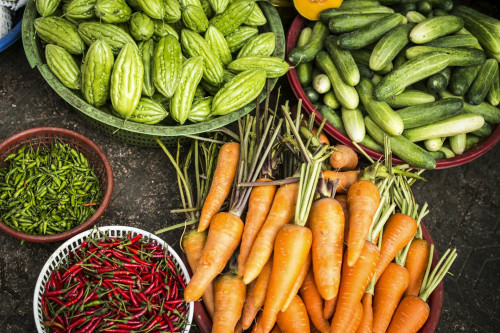
- Root vegetables – carrots, beets, parsnips, and sweet potatoes add natural sweetness and texture.
- Cabbage and kale – sturdy greens that can be sautéed, braised, or used raw in slaws.
Fall is also a wonderful time to experiment with fermentation—try making sauerkraut or kimchi to extend the life of your produce and add tangy depth to your meals.
Winter – Hearty and Nourishing
Even in the colder months, there’s plenty of produce to keep your meals vibrant and satisfying. Winter vegetables are robust and nutrient-dense, perfect for warming dishes.
- Cabbage, collards, and kale – packed with vitamins and great in soups, stews, or grain bowls.
- Onions, leeks, and garlic – essential for building flavor in winter cooking.
- Root vegetables and celery root – roast them with herbs or blend them into creamy soups for comfort food that’s still plant-based.
Winter is also the season to lean on pantry staples like lentils, beans, and whole grains, which pair beautifully with hearty winter produce.
How to Get Started with Seasonal Eating
Eating seasonally doesn’t have to be complicated. Start small and build from there:
- Check a seasonal produce guide – many websites and apps list what’s in season in your region.
- Shop local – visit farmers’ markets, farm stands, or join a CSA (Community Supported Agriculture) program.
- Plan meals around what’s fresh – let the produce inspire your weekly menu.
- Preserve the harvest – freeze, pickle, or ferment to enjoy summer flavors in winter.
Once you start eating with the seasons, you’ll notice your meals become more flavorful, your cooking more creative, and your connection to nature stronger.
Læs også:

A Greener, More Flavorful Way to Eat
Seasonal eating isn’t just about health or sustainability—it’s about joy. Following the rhythm of the seasons brings variety, balance, and a deeper appreciation for the food on your plate. It’s the key to a plant-based lifestyle that’s good for you, your community, and the planet.
Læs også: